Approaching Gustav Mahler: A Digression
On 10 January 2018
A retrospective look at the "Eggisrieder Seminar" 2017 – and at the same time a recommendation
A fruitful connection has existed for years between the Karlsruhe music scene and the Allgäu painter Erich Schickling (1924-2012). In Eggisried, a small hamlet near the market town of Ottobeuren, lies the place where this visual artist worked; he designed mainly sacred spaces, and glass windows in particular. Ulrike Meyer, lecturer in piano at the Karlsruhe University of Music, has long been connected with Haus Schickling; Eggisried is also the centre of her life. Within the Schickling Foundation, which she co-founded, she not only administers the artistic legacy but also keeps the constant exchange between music and the visual arts alive. Karlsruhe musicians are therefore regular guests in the rooms of the Schickling Foundation, often as part of talks lasting several days. One highlight of last year was the approaches to the composer Gustav Mahler as part of the "Eggisrieder Seminar". A look back.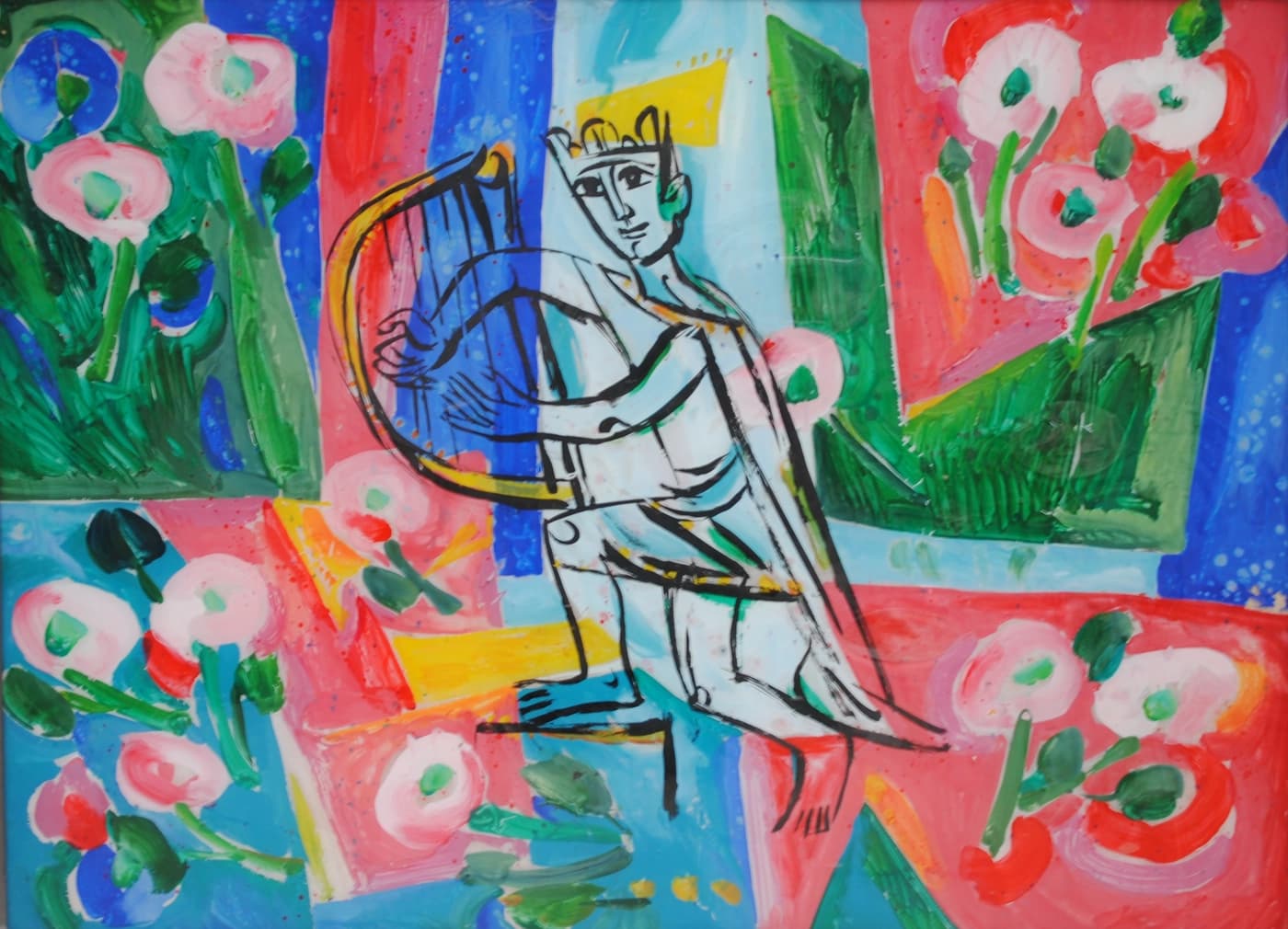
Anyone who looks at the pictures of the painter Erich Schickling recognises that what is depicted here is not only (mostly) Christian motifs, but that the artist again and again lays bare the roots of the whole of European culture: Christian, Jewish, ancient; more than that: these cultures work together here in a unique way. The Allgäu clarinettist Günter Schwanghart, who among other things is engaged with klezmer music and is often a guest at Haus Schickling, approached the composer Gustav Mahler from precisely these points of view. "Can one describe Mahler from the Jewish idea outwards?" was his line of thought. Schwanghart emphasised that Mahler's music can by no means be pinned to Judaism. Yet on closer examination remarkable parallels emerge between the nature of klezmer and the compositional style of Gustav Mahler, even though his works show no klezmer elements.
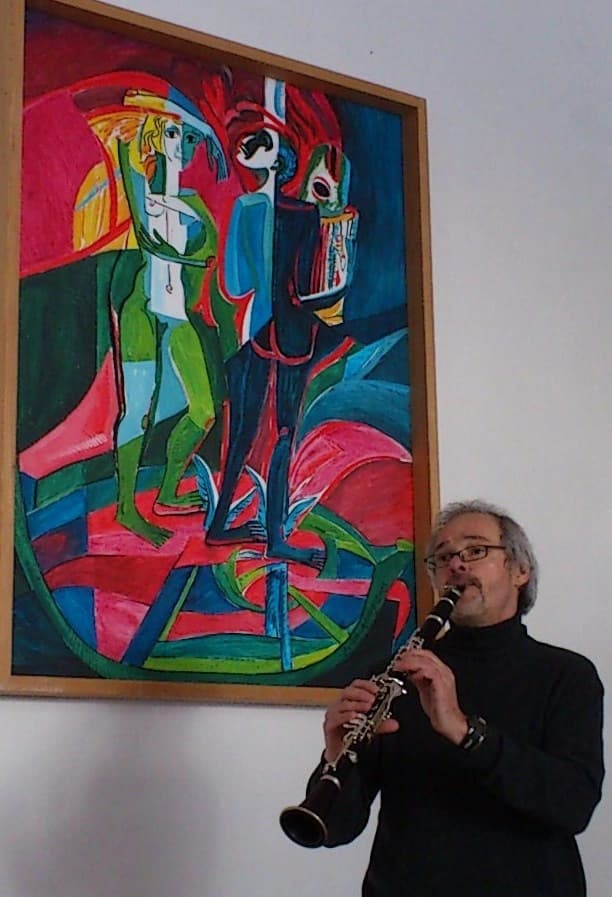
To begin with, the klezmorim - the performers of klezmer – were itinerant musicians, which is why their music absorbed various influences. And klezmer music spread all the more when the Eastern European Jews had to leave their homeland. In this way klezmer, in its mixture of different elements, essentially also reflects something fundamental in Judaism: namely life in exile, and the adaptation and assimilation that go with it. It belongs to the core of Jewish existence to be mixed with different cultures. The meaning of the word already points to this: klezmer, that means "vessel of song"; the musician himself is accordingly also a vessel, he takes in, and he passes on. Above all, though, he drives the melodies ever onwards, into different variants, breaking through minor and major tonality; the whole thing happens ever more strikingly, ever more intensely, towards the divine and at the same time ever close to the abyss. Bitter wit and irony, sorrow behind the laughter – that is part of the basic Jewish mood.
Something similar can be said of the music of Gustav Mahler, and generally also of the sense of life of the "Fin de Siècle": everything is dissolving, not only the keys in late Romanticism at the transition to modernism, but also monarchies and social structures; the Austrian multi-ethnic state is seething, a certain end-times mood prevails, and at the same time psychoanalysis raises the question of the dark, hidden drives, the "night side" of the human being. Suffering at existence is also part of Mahler's personality, and characteristic of his music here too is the mingling of different influences; a collage technique that dissolves old listening habits and, with its flashes of waltzes and folk tunes, at the same time meets people where they are.
The full article can be found in PAMINA-Magazin - Classical music online in the south-west at https://www.pamina-magazin.de/bericht/195-annaeherungen-an-gustav-mahler-ein-exkurs