Young Dialogues of Romanticism
On 16 June 2026
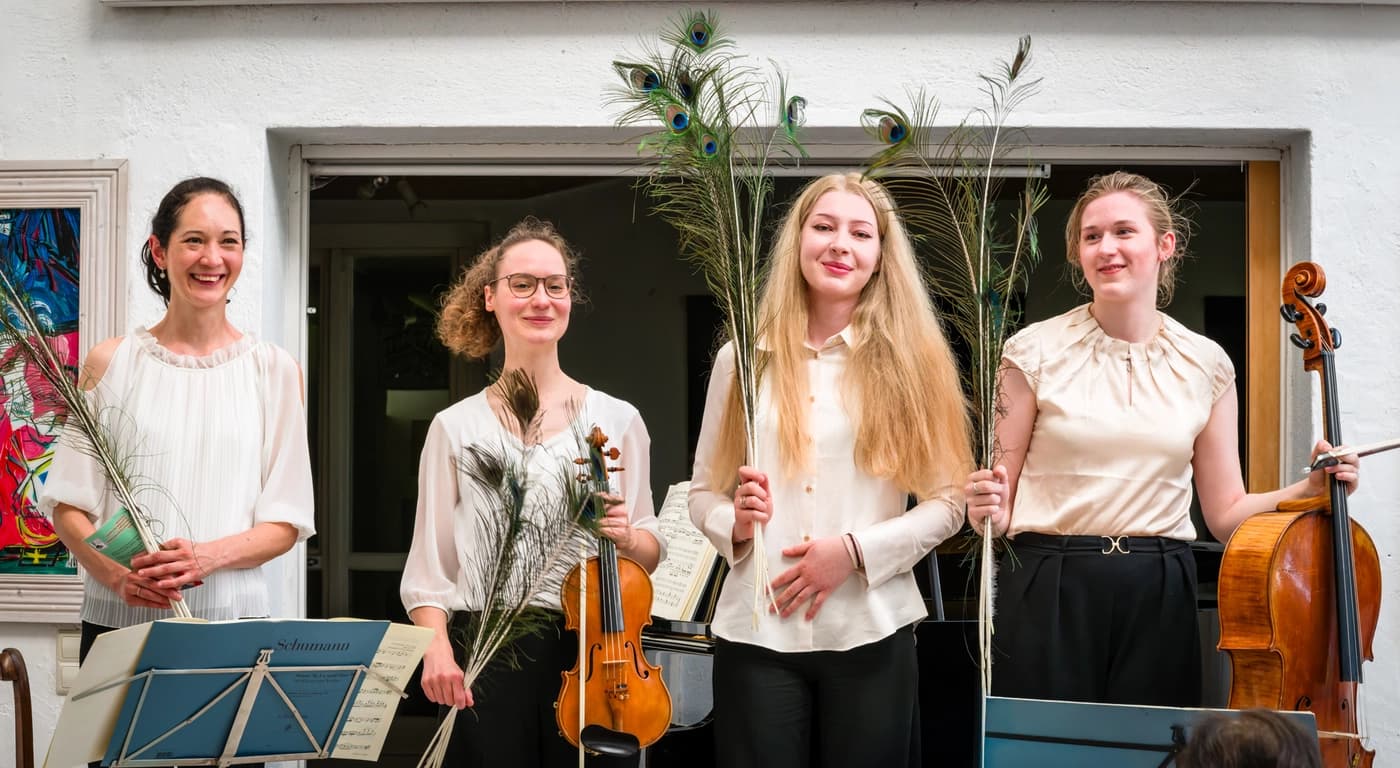
The newly crowned Adularia-Trio from Augsburg shaped a spirited and artistically accomplished afternoon in the summery exhibition hall of the Erich-Schickling-Stiftung.
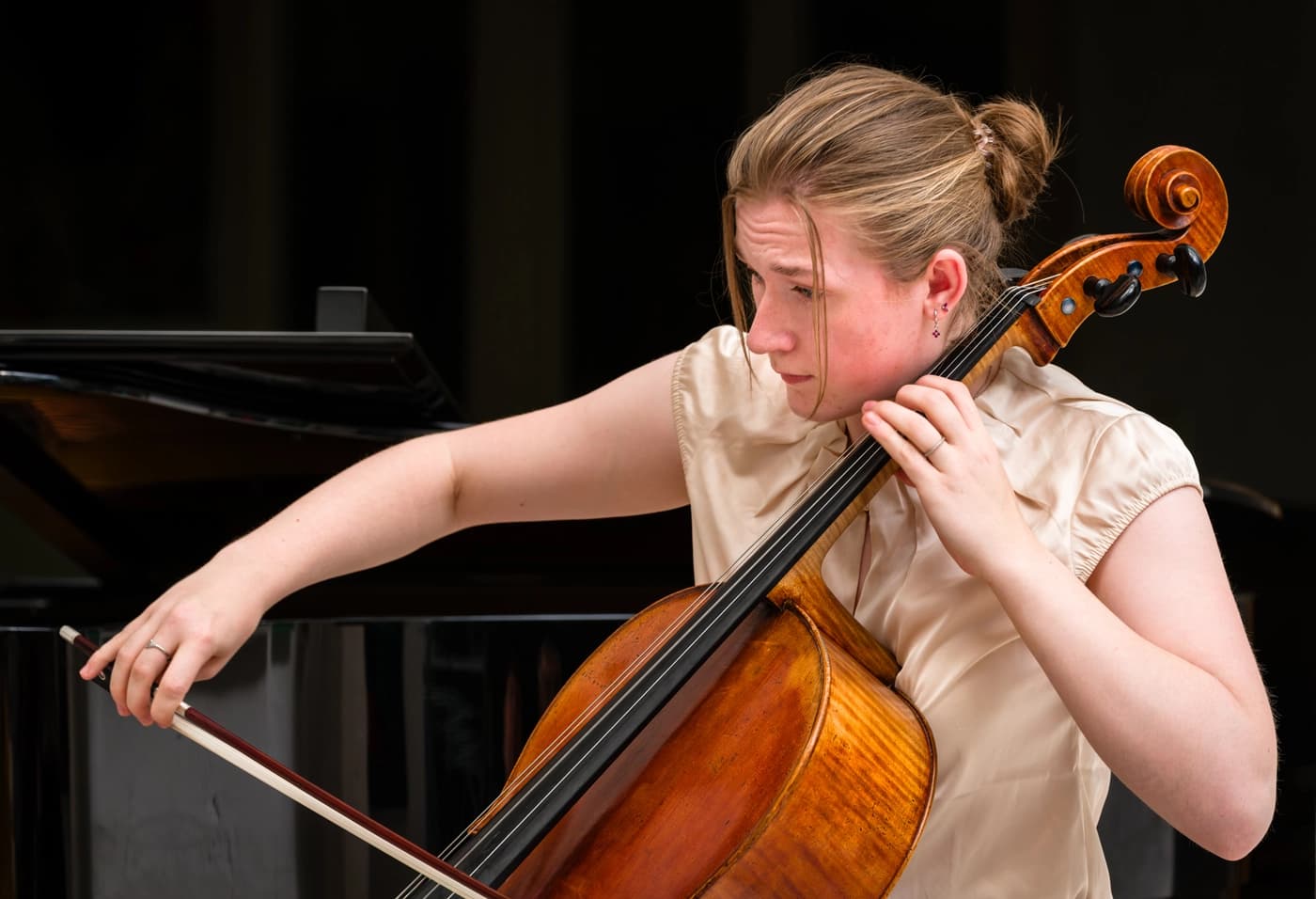
The announced “Dialogues of Romanticism” were devoted first and foremost to the relationship between Clara and Robert Schumann, and in particular to the genre of the “piano trio”. Yet the evening opened with a glance beyond Robert Schumann: with the Sonata for Piano and Violoncello op. 99 in F major. It was Schumann himself, after all, who with a groundbreaking article had opened the door to the world for the young pianist and composer. Leonie Harrer (cello) played the highly dramatic first movement with a big tone and great expression, brilliantly accompanied by Ayumi Janke at the piano. The broad arcs of the 2nd movement, Adagio affetuoso, were led by the cello with calm and sustaining sound and wonderfully celebrated together.
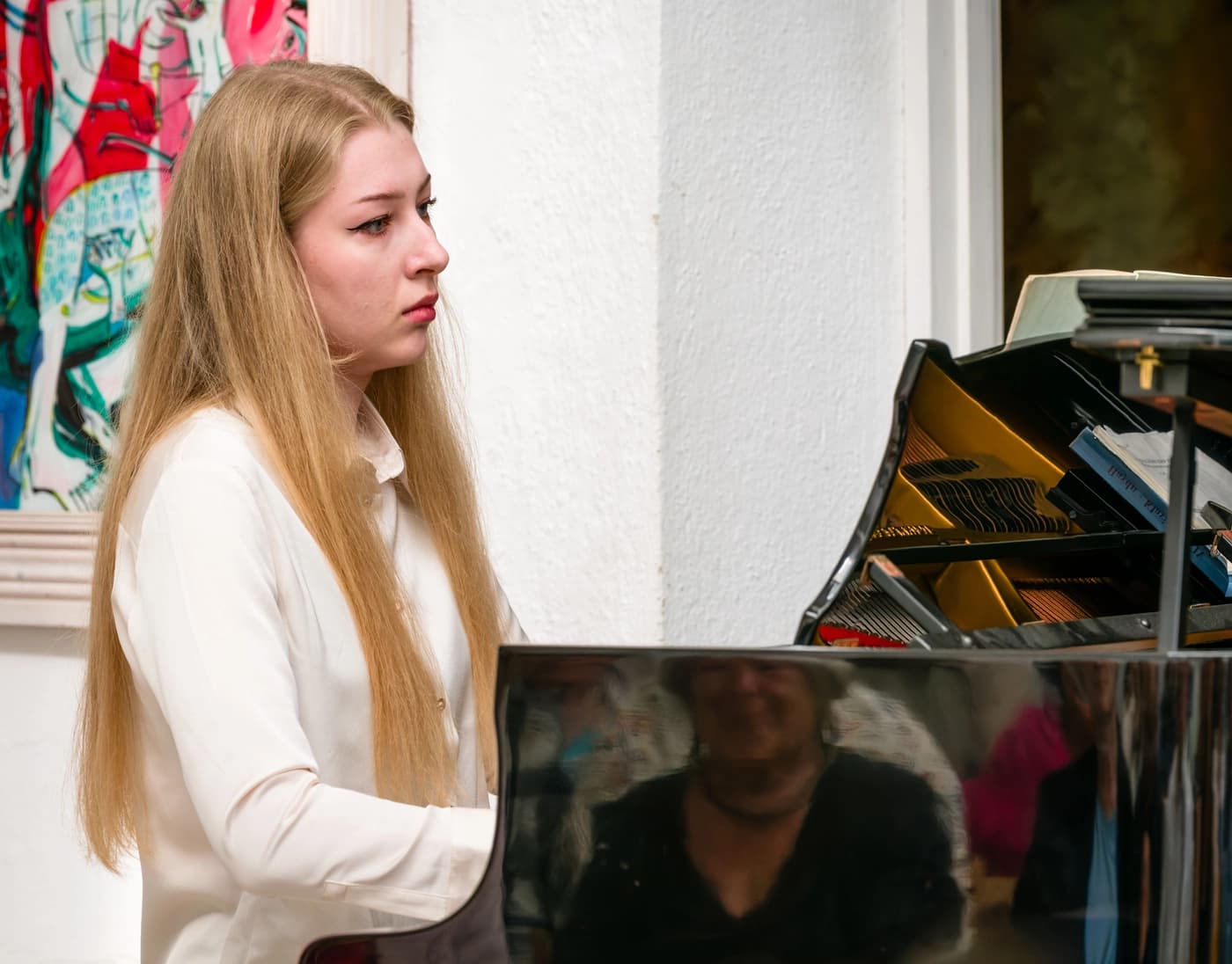
The bridge to Robert Schumann was formed by two pieces from his piano cycle Carnaval op. 9: “Eusebius” with tenderness, “Florestan” with temperament, finely played by Mariija Lychana, in keeping with the two characters who, in Schumann's literary cabinet of figures, corresponded to his tension-filled state of mind.
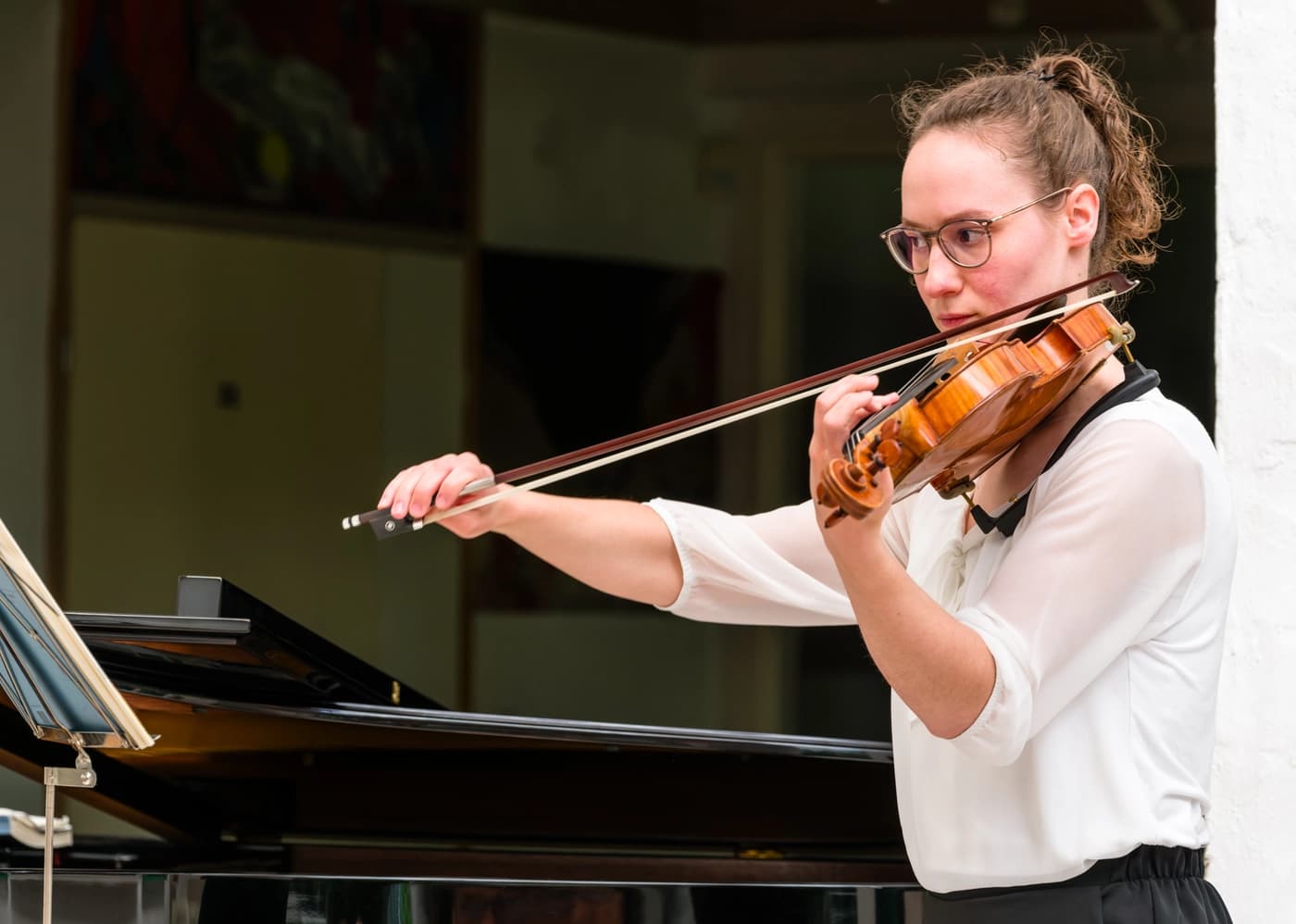
A more mature and more inward Schumann style followed with the Violin Sonata in A minor op. 105, about as great a challenge as can be imagined for a young musician. The violinist Felicitas Marxer took on this task with great seriousness and skill, together with her accompanist Ayumi Janke. With her spoken introduction, Felicitas introduced not only this work but also the main work of the concert, the Piano Trio in G minor op. 17 by Clara Schumann.
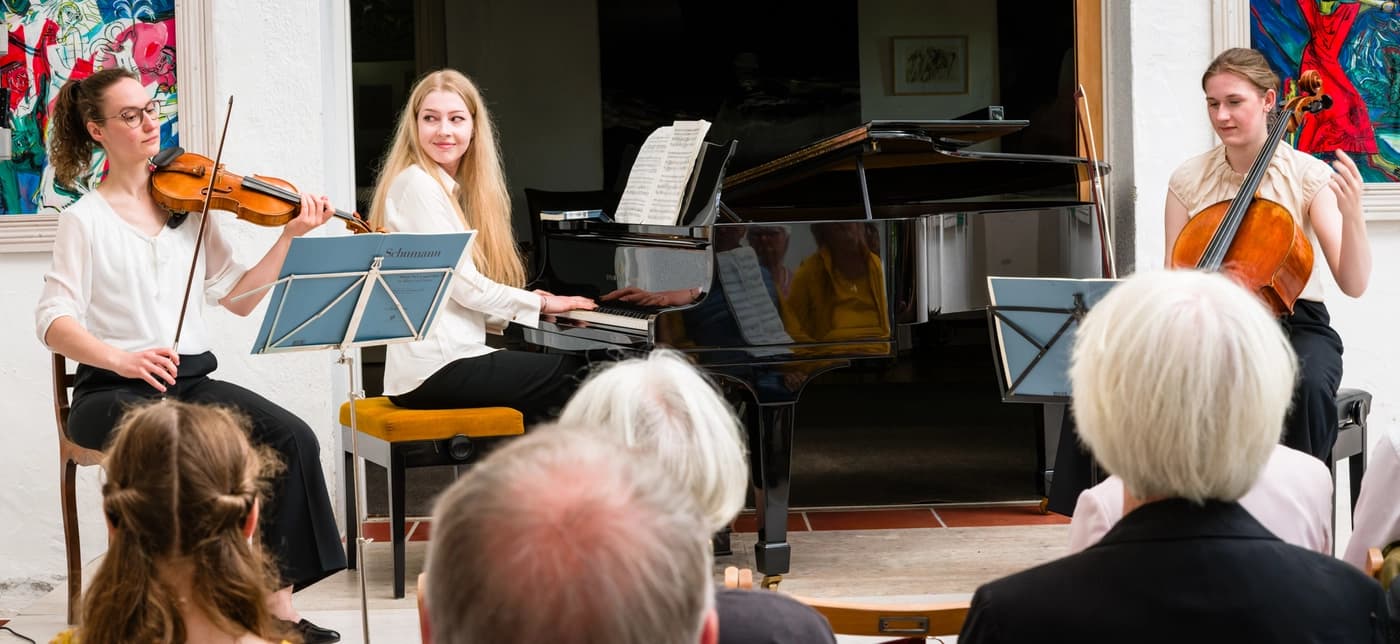
This was heard after the interval, played by the now assembled Adularia-Trio. They convinced not only the Eggisried audience with their chamber-music skill and their independent creative potential, but had already won 2nd prize with it barely a week earlier at the chamber music competition of the LMC Augsburg (Leopold Mozart College of Music at the University of Augsburg). With their encore, the “Rondo a l’Ongarese” from Josef Haydn's famous G major piano trio, the young musicians then fully ignited the audience's enthusiasm.
A special feature of this project:
The day before, the musicians presented part of their programme to the pupils of the Bernhard-Strigel-Gymnasium and reflected with them on their impressions of the music they had heard.
FLYEROpen PDF