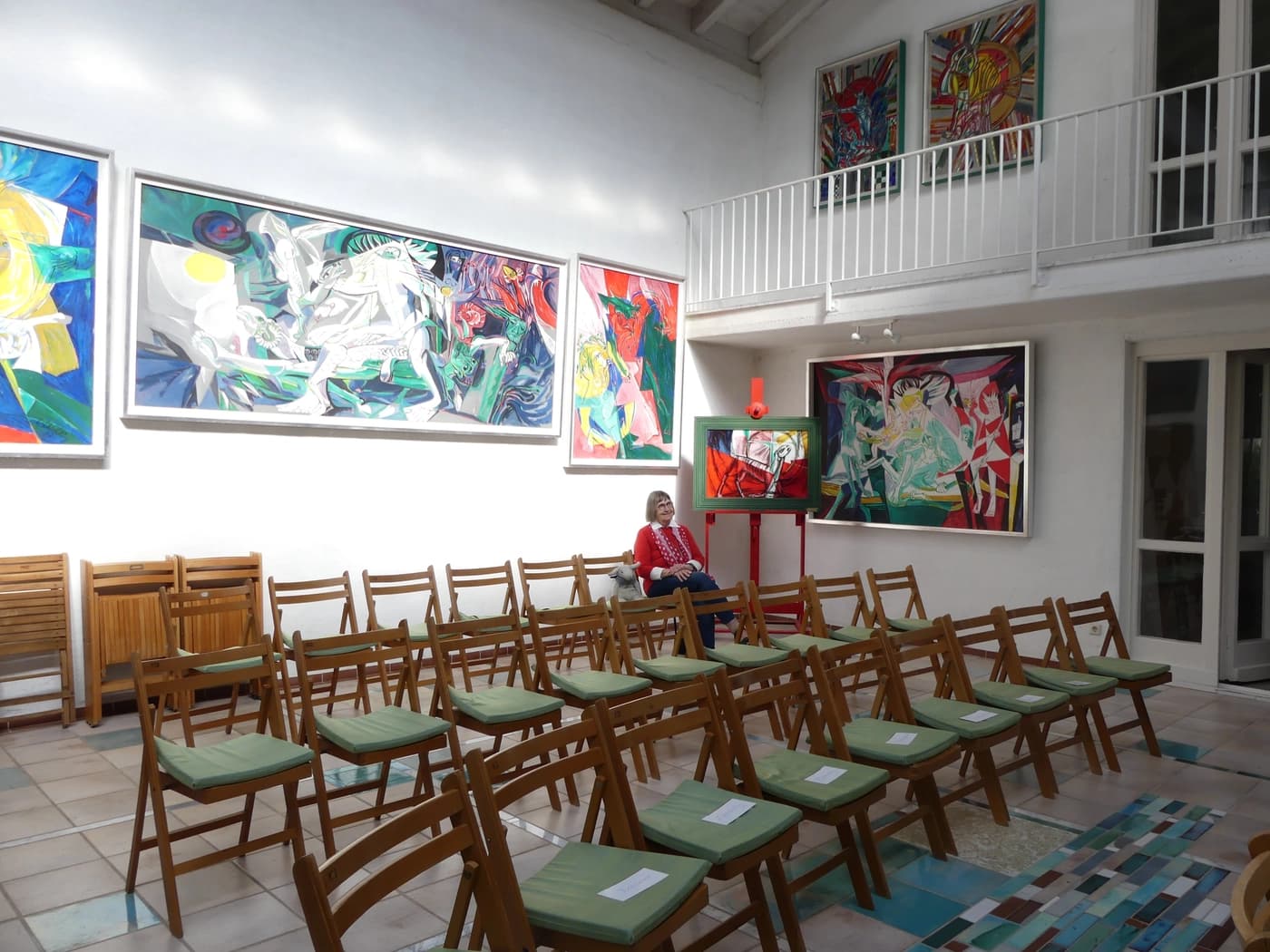
24th Eggisrieder Seminar
On 7 September 2025
Already last year, as I drove home from the Eggisrieder summer seminar, brimming with music and good encounters, one thing was clear to me: to take part again in 2025, of course, as a listener and learner, to discover the new expanses of music and to explore them more deeply.
This year's theme was promising: "Music from the Underground". Works by the Tatar composer Sophia Gubaidulina (1931 – 2025) and her contemporaries were on the programme. Music from the underground – that sounded like protest, like a demonstration against social and political conditions, injustice and violence…
The seminar began with a cheerful, varied house concert by the participating students and graduates.
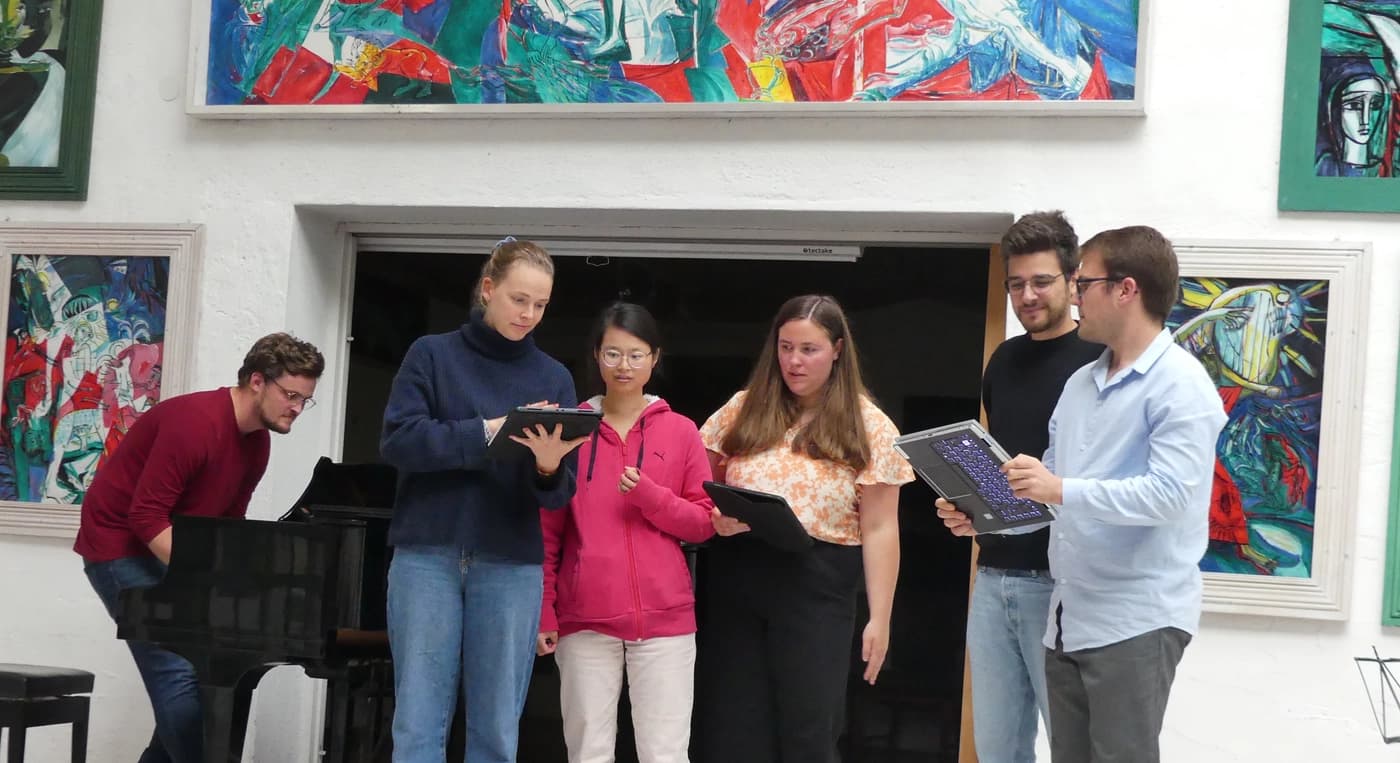
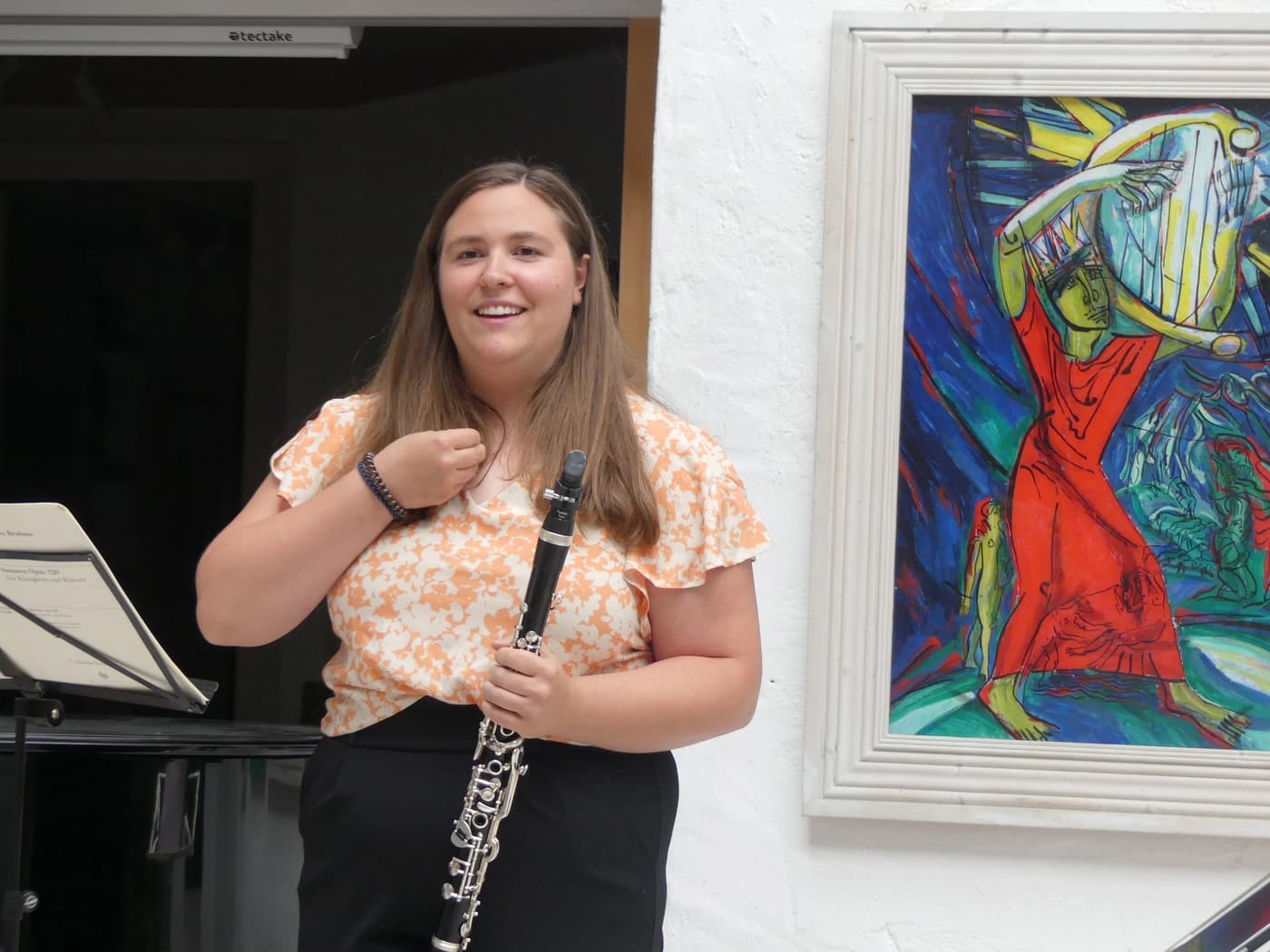
Hendrik Rekers (tenor) skilfully combined Heine's irony with Schumann's music, followed by Brahms's clarinet sonata in E flat major, played by Elisa Zimpfer, who in the further course of the concert also delighted with her comedic talent. Her fellow performer, Tim Brucker, opened up the cajon to me for the first time as an independent, important instrument within the overall sound.
Daniel Reinhard, Antonia Schiefer and Linda Chen completed the ensemble at the end of the evening's music when they performed two old folk songs a cappella, which surely all the listeners sang along to in their hearts.
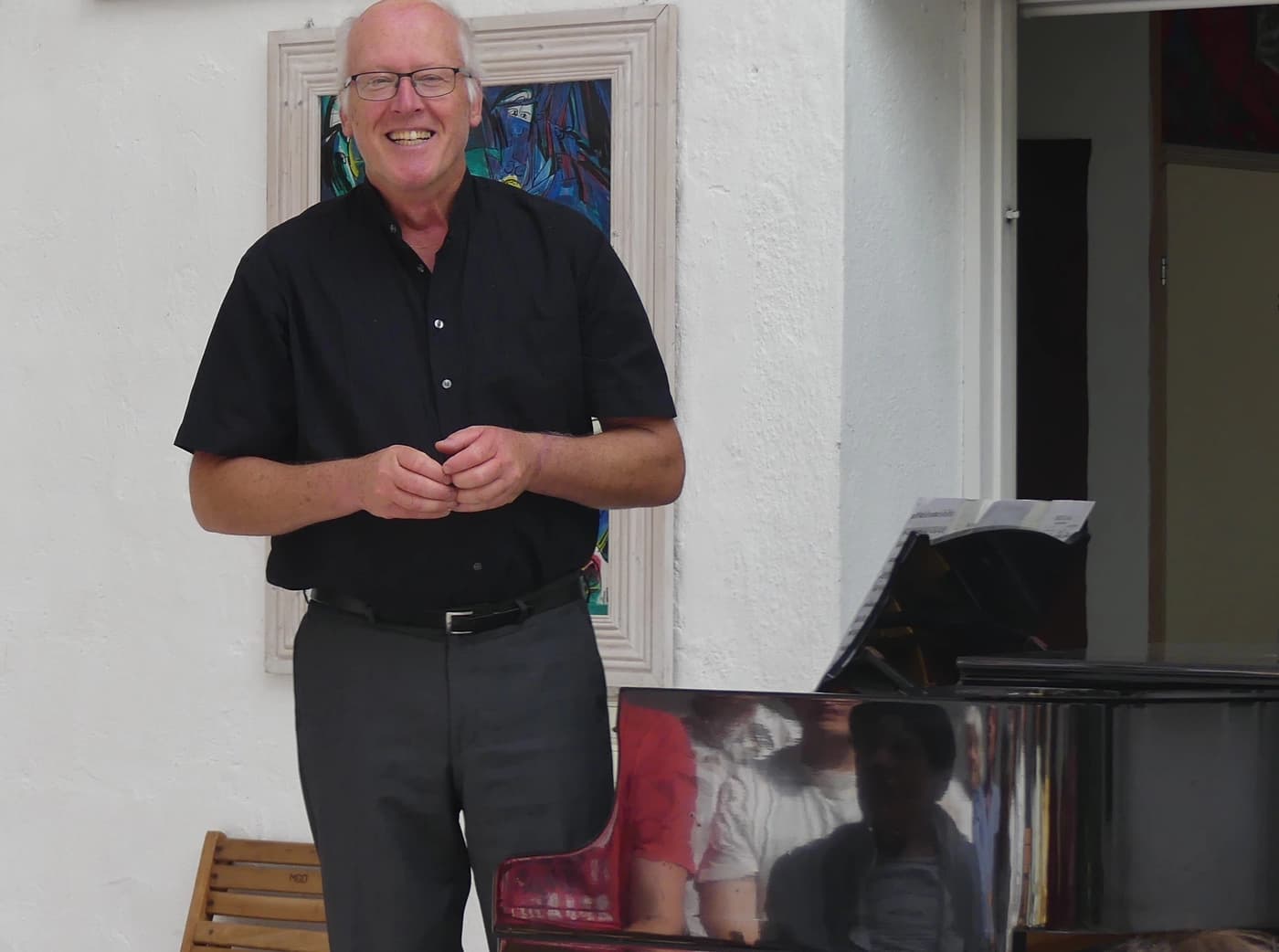
The young people were supported and accompanied by their lecturer Manfred Kratzer, who as an encore shone with a piece "…only for the left hand…". A wonderful evening, an important preparation for the tasks of the following Saturday!
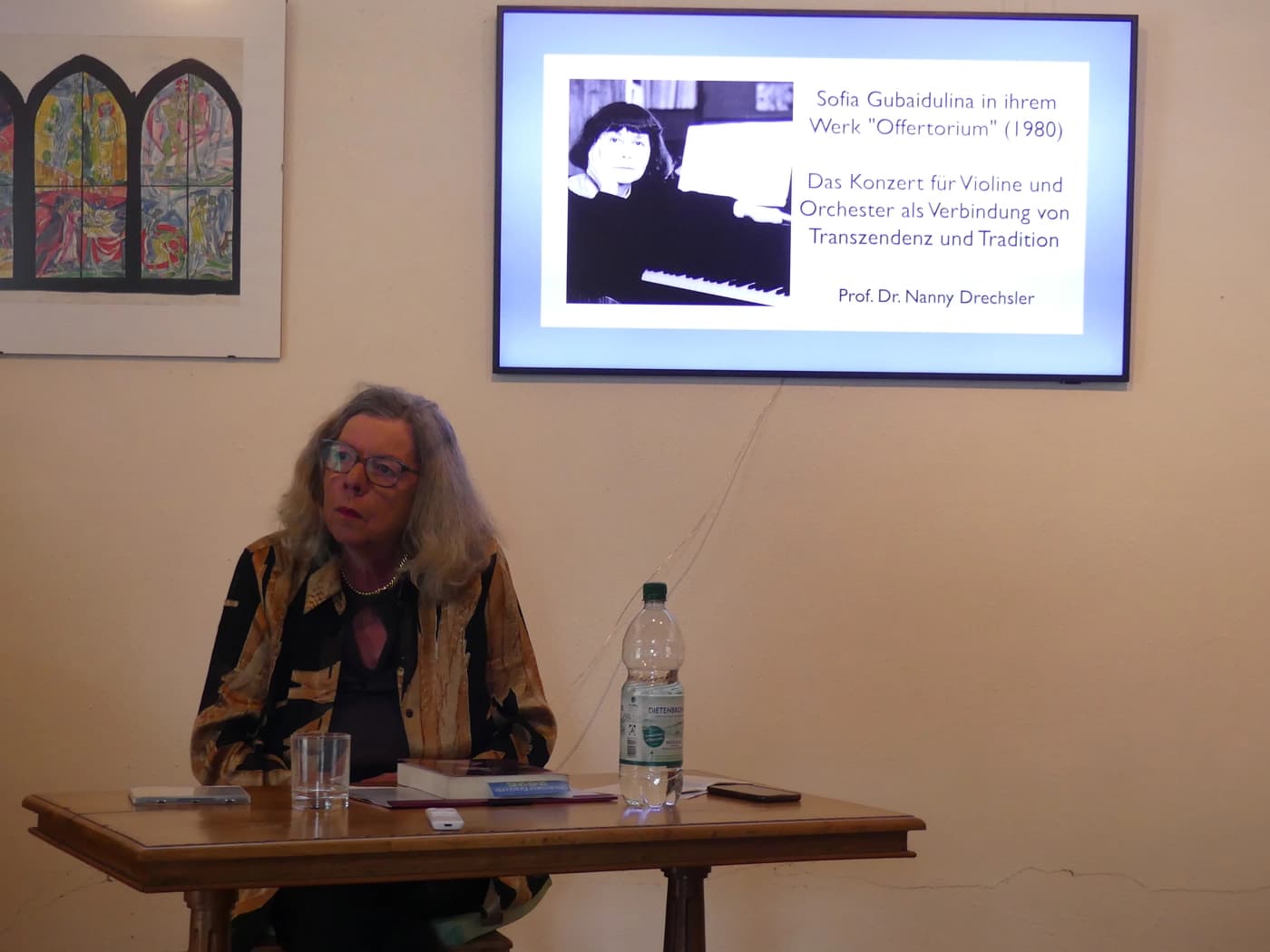
Here the talk by Prof. Nanny Drechsler on a work by Sophia Gubaidulina was on the programme. Gubaidulina composed the "Offertorium" in 1980 and led us listeners into the time and world of totalitarian nonsense in the Soviet Union, which she experienced, lived through and survived. This music speaks without words in a dimension in which chaos, mysticism, violence, pain, protest and hope are united. It took much courage and strength to expose oneself to this sound work, to listen to it, to accept it, to recognise in the wordless what was being said.
At first we could not talk about it, let alone discuss it, so deep was our dismay…
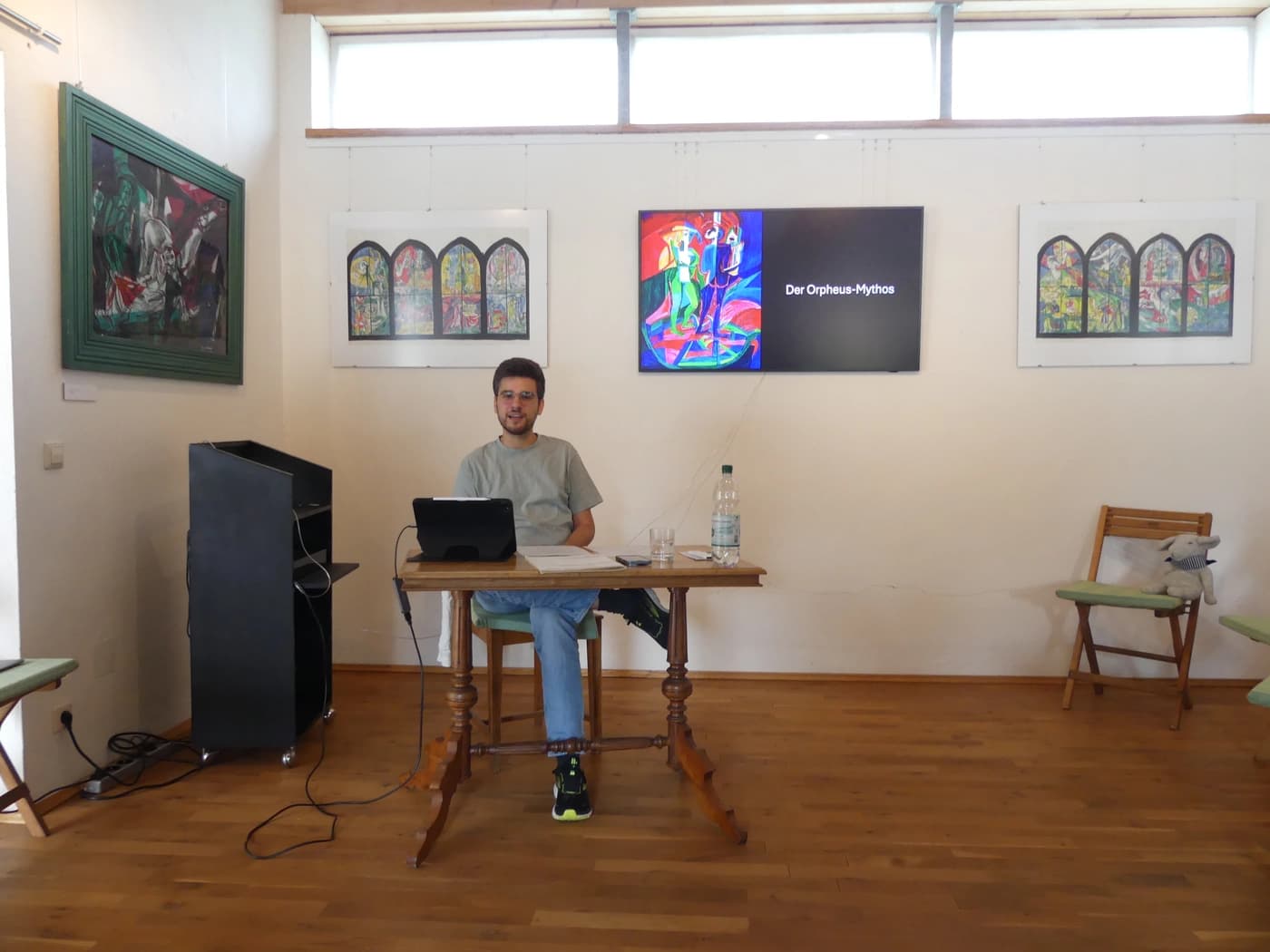
No easier was "Orpheus behind the wire", a piece for eight- to twelve-part choir by Hans Werner Henze (1985). The text for it was written by Eduard Bond. Daniel Reinhard introduced us to this work, which was written as a protest against another totalitarian nonsense, this time in South America. Here the Orpheus myth was brought into the present day.
In five word-pictures the story of Orpheus and Eurydice is transposed into present-day "hells" and situations. Hell in its silence, in which no word, no sound has power. Isolation, separation, despair take hold. Is there a life beyond this unbearable existence? Can one still write poems after Auschwitz…? The survivors find themselves in a different, totally changed world. And they live on, for at some point – at some point - the music of Orpheus sounds, of victory, of freedom…
Again we listeners sat there dismayed, silenced and almost frozen. But this time the words in the composition helped us to find expression of our own. We were even able to give words to what was spoken without speech in Gubaidulina's music, so clear were the parallels.
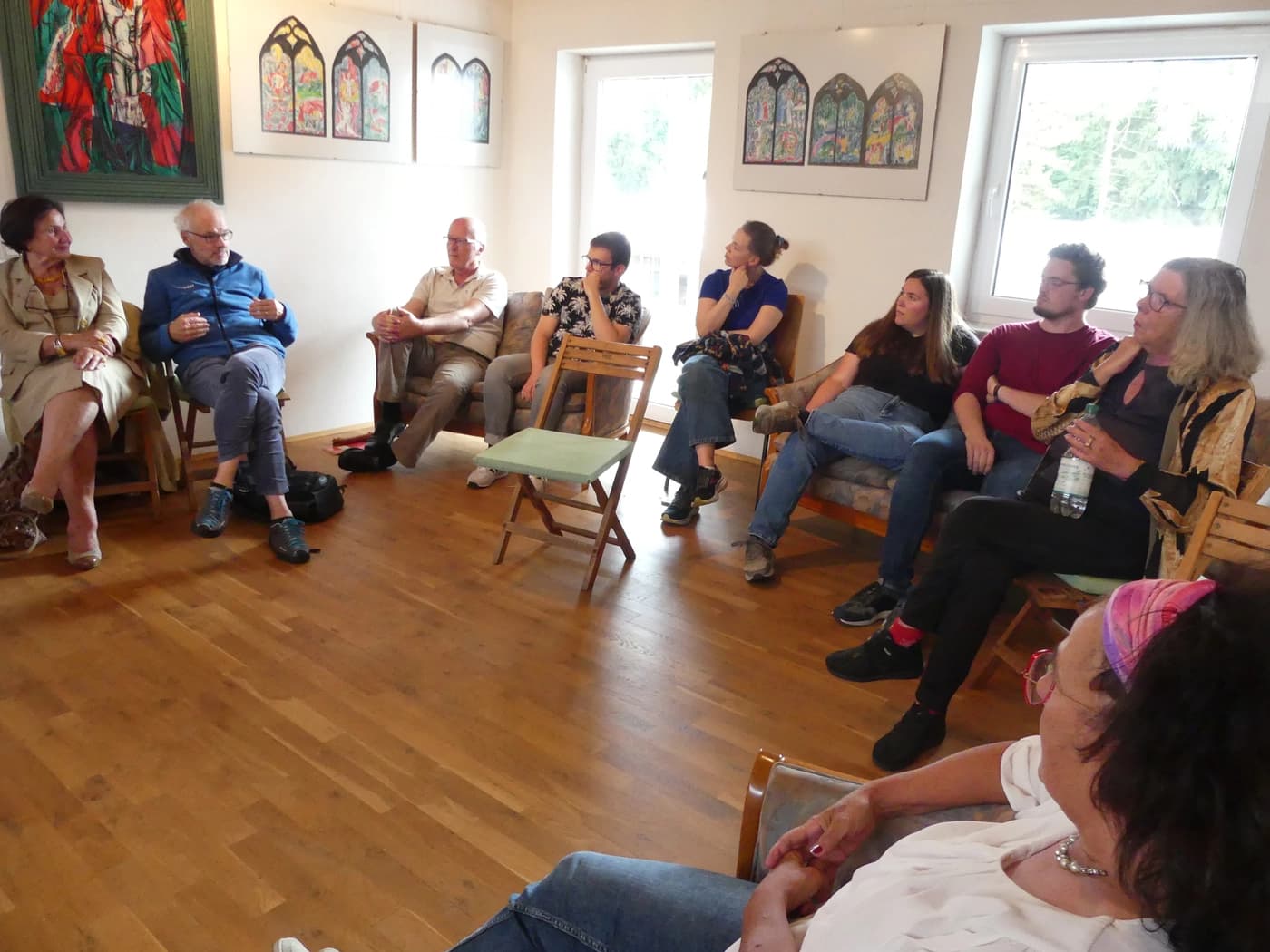
The content of both compositions – protest against violence, inhumanity, oppression, contempt… - also led us to the question:
What meaning, what task, what power does music have – both as art and in the responsibility of the artists – in the face of the political and social situation? When is it misused, when is it in the truest sense necessary?
Our questions and our dismay were deepened on the Saturday evening by a documentary film about Sophia Gubaidulina and her contemporaries, for example the composer Valentin Silvestrov.
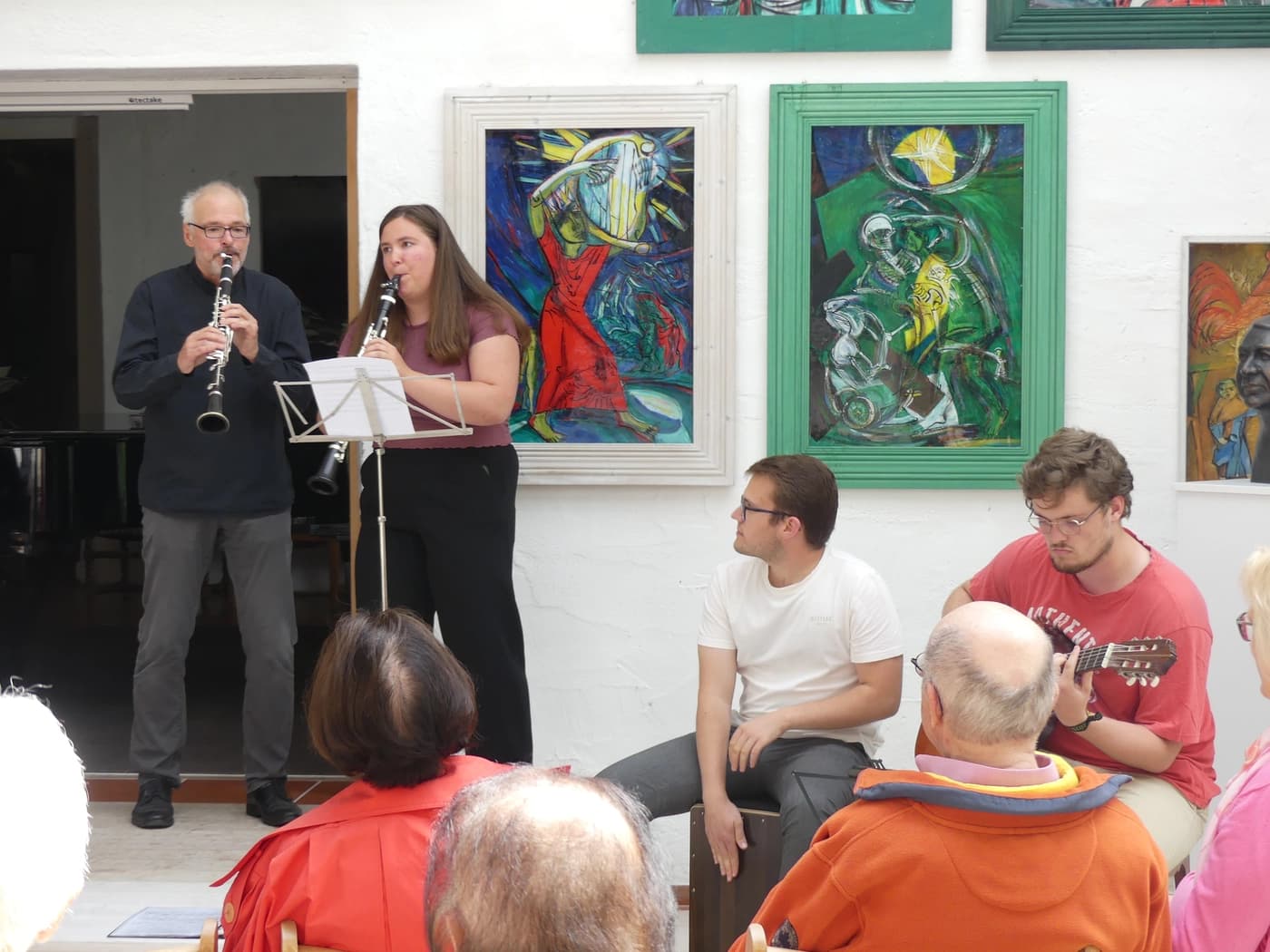
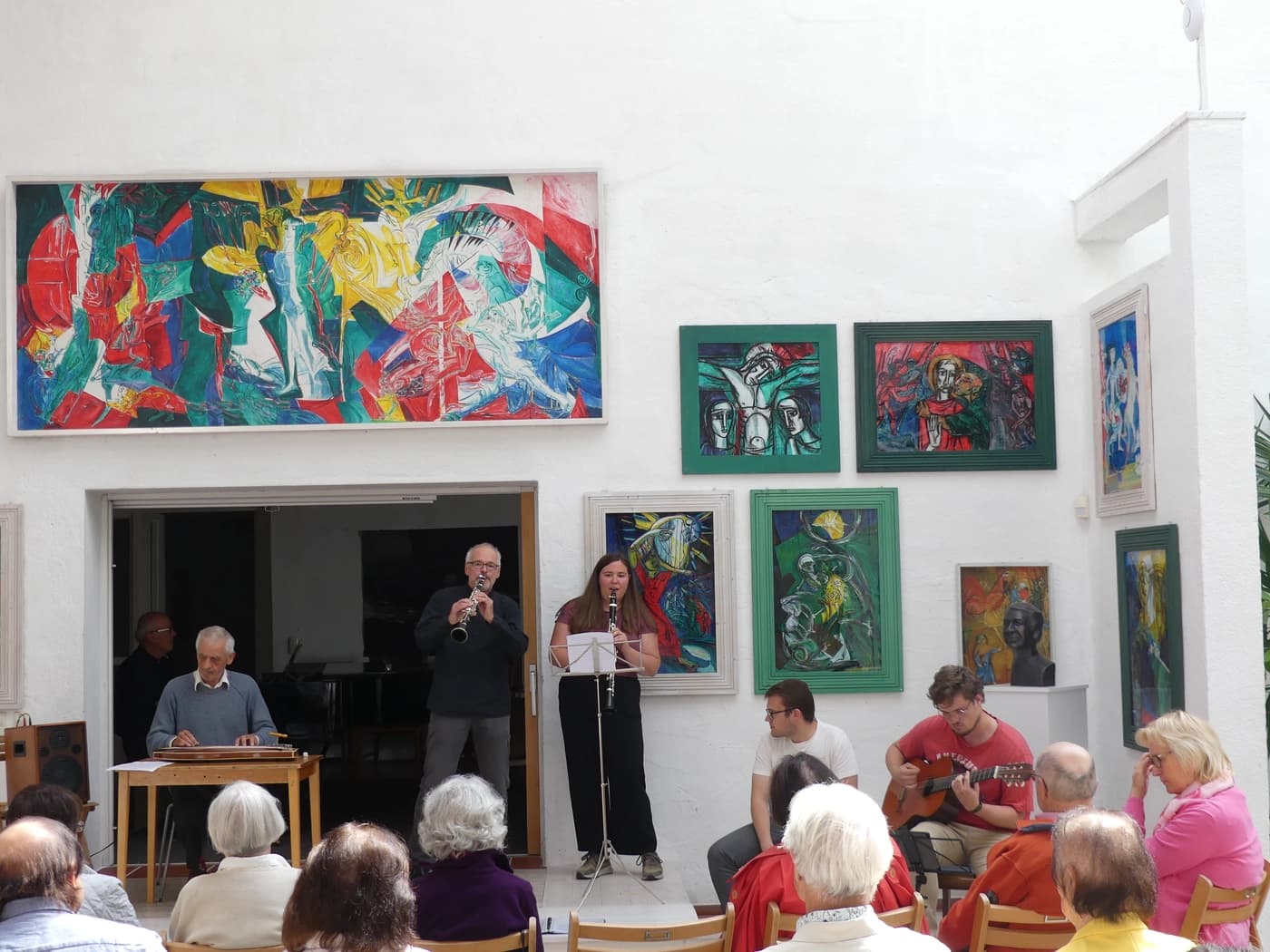
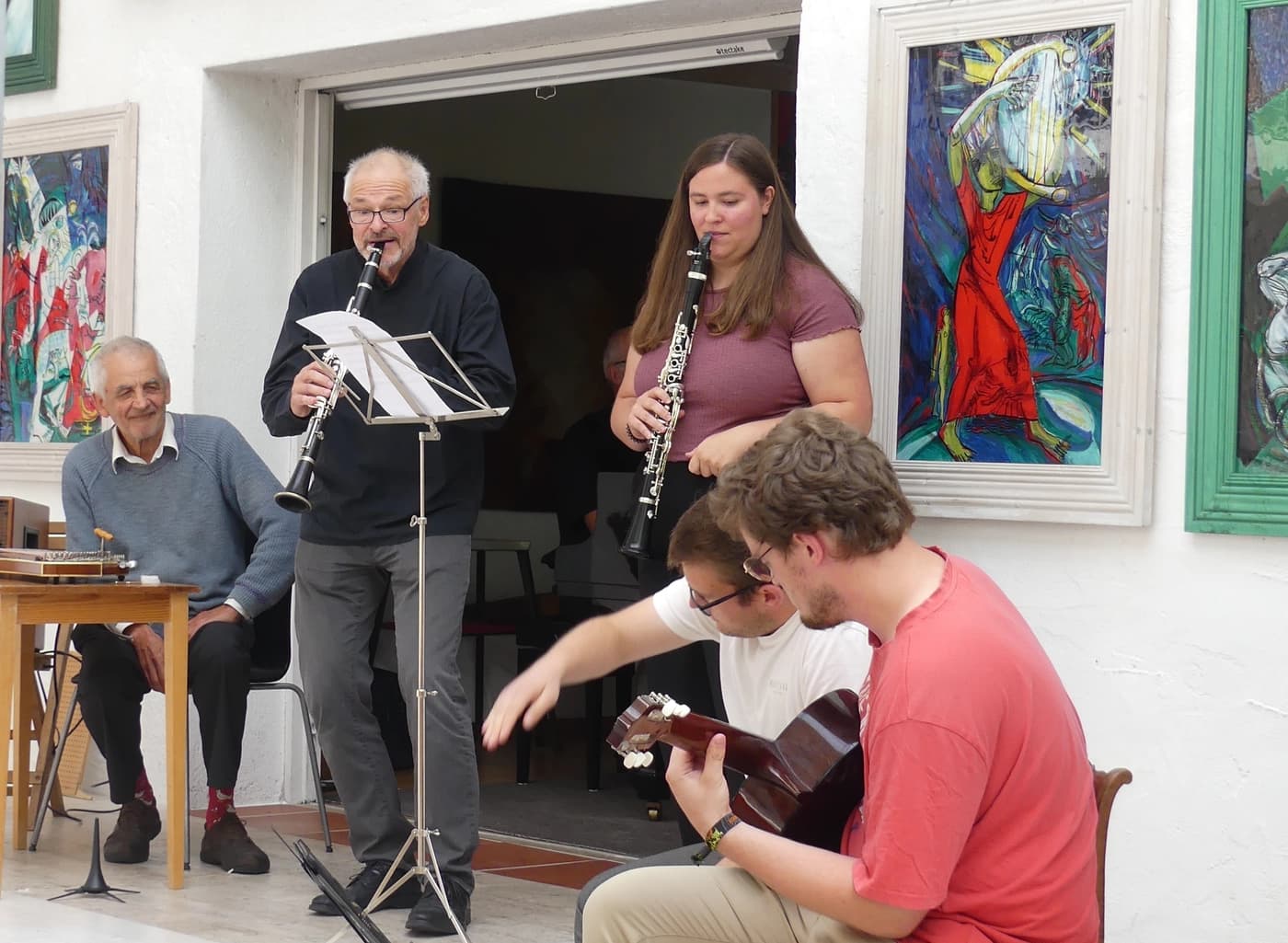
Sunday morning lifted us out of this low, lived through in thought, with a bright matinee. During the spontaneous contributions Josef Bichlmair and Günter Schwanghart joined the performers with zither and clarinet and delivered a magnificent jazz improvisation, after which all the artists were showered with lively applause and thanks!
Equally warm thanks went to our host Ulrike Meyer, who, supported by Hongying and her delicious Chinese cooking, created an absolutely feel-good environment for the participants. We will gladly come again!
Text: Christine Silla - Kiefer