Death and the Maiden.
On 7 June 2025
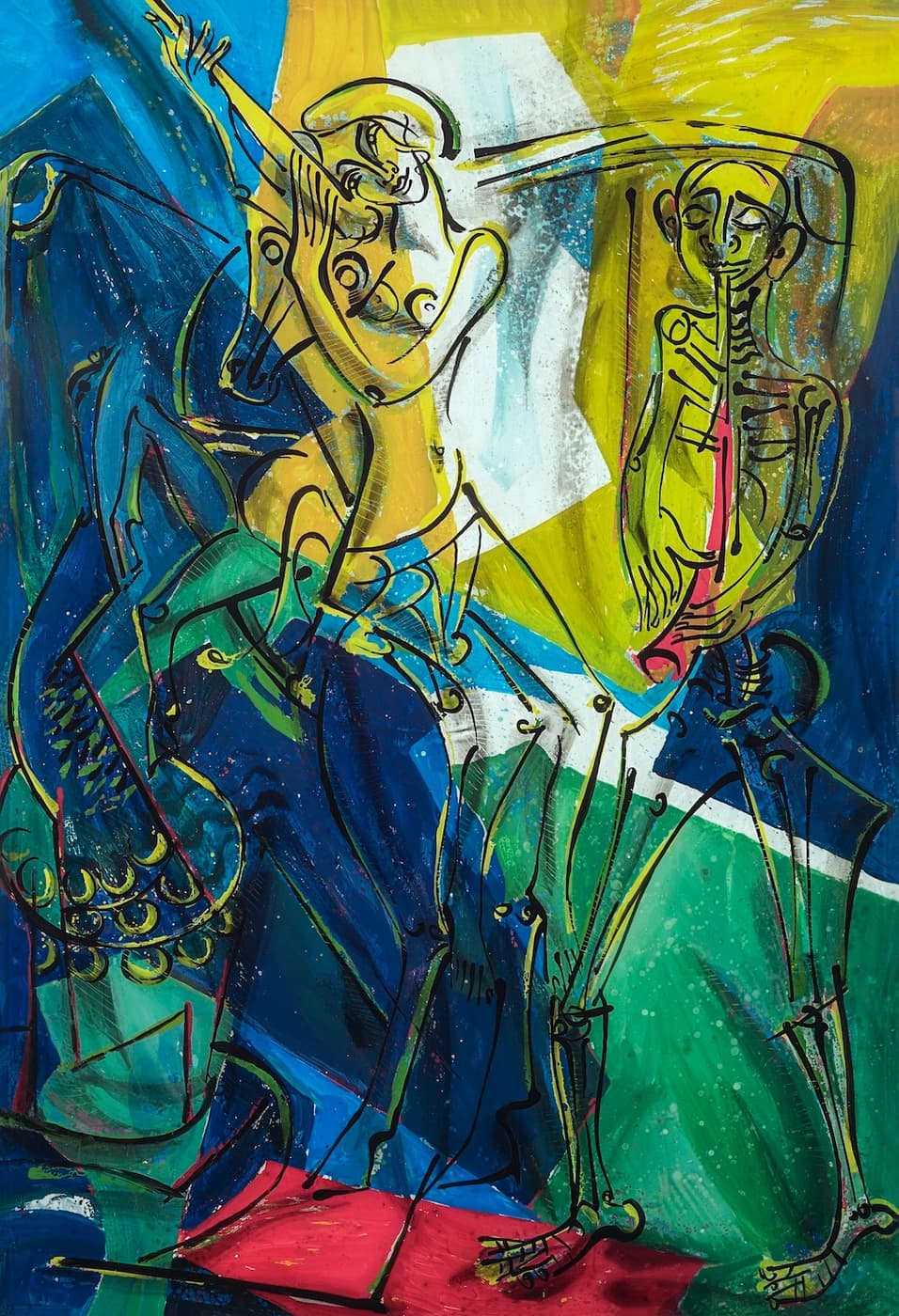
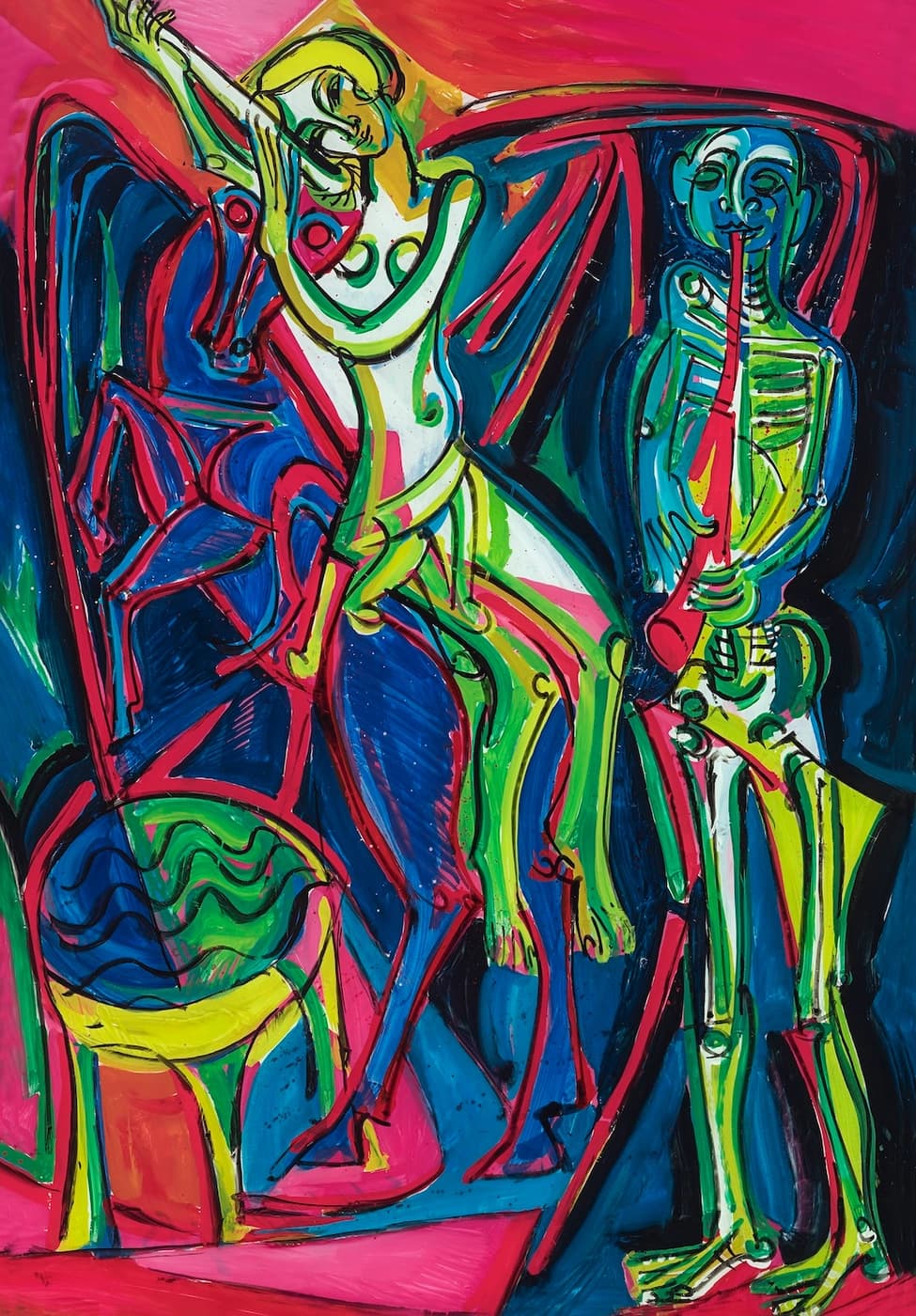
In 1985 Erich Schickling worked on the theme of "Death and the Maiden" in no fewer than four different versions. He was inspired to do so by the performance of Franz Schubert's string quartet of the same name in Ottobeuren. This famous work and its background were now the subject of an event at the Schickling Foundation. The gripping performance by the Malion Quartet crowned an afternoon in which different arts and perspectives flowed into one another illuminatingly.
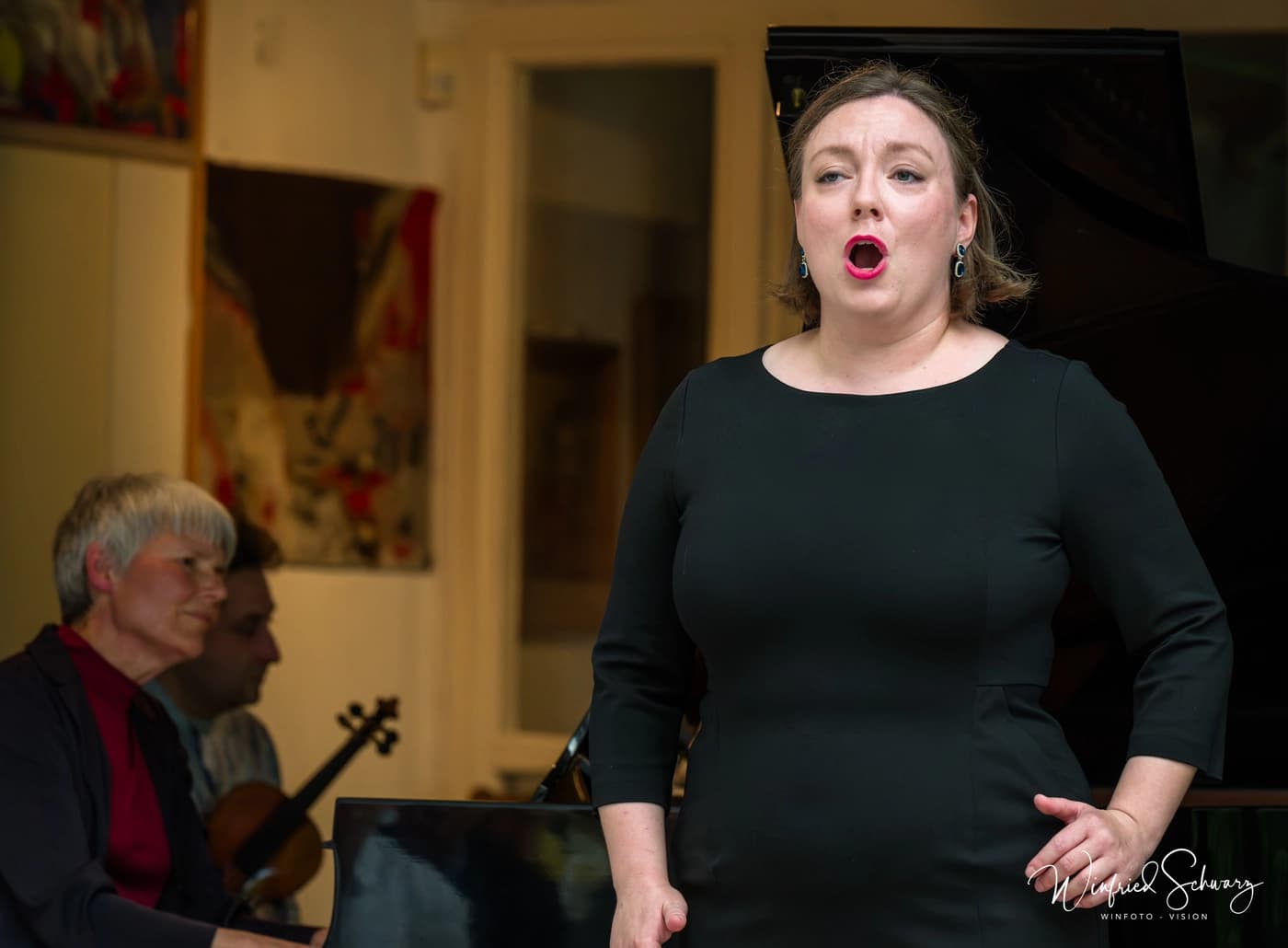
The opening was formed by two songs with which Schubert felt his way towards the theme: "The Wanderer" op. 4 no. 1 and "Death and the Maiden" op. 7 no. 3 were sensitively performed by Helena Donie (mezzo-soprano) and Ulrike Meyer (piano).
Andreas Kammenos then shared his thoughts. Already known in Eggisried as a recorder virtuoso, here was a young man able to take his listeners on a wide-ranging, exciting journey of thought, freely and without a script. Kammenos illuminated and analysed the archetypal rhythmic motif long-short-short, which Schubert uses as a leitmotif not only in this work. It is the solemn tread of the pavane, a distinguished courtly dance. That death does not spread fear and terror, but mingles amiably among the people striding through life, is a motif that has recurred again and again since the late Middle Ages.
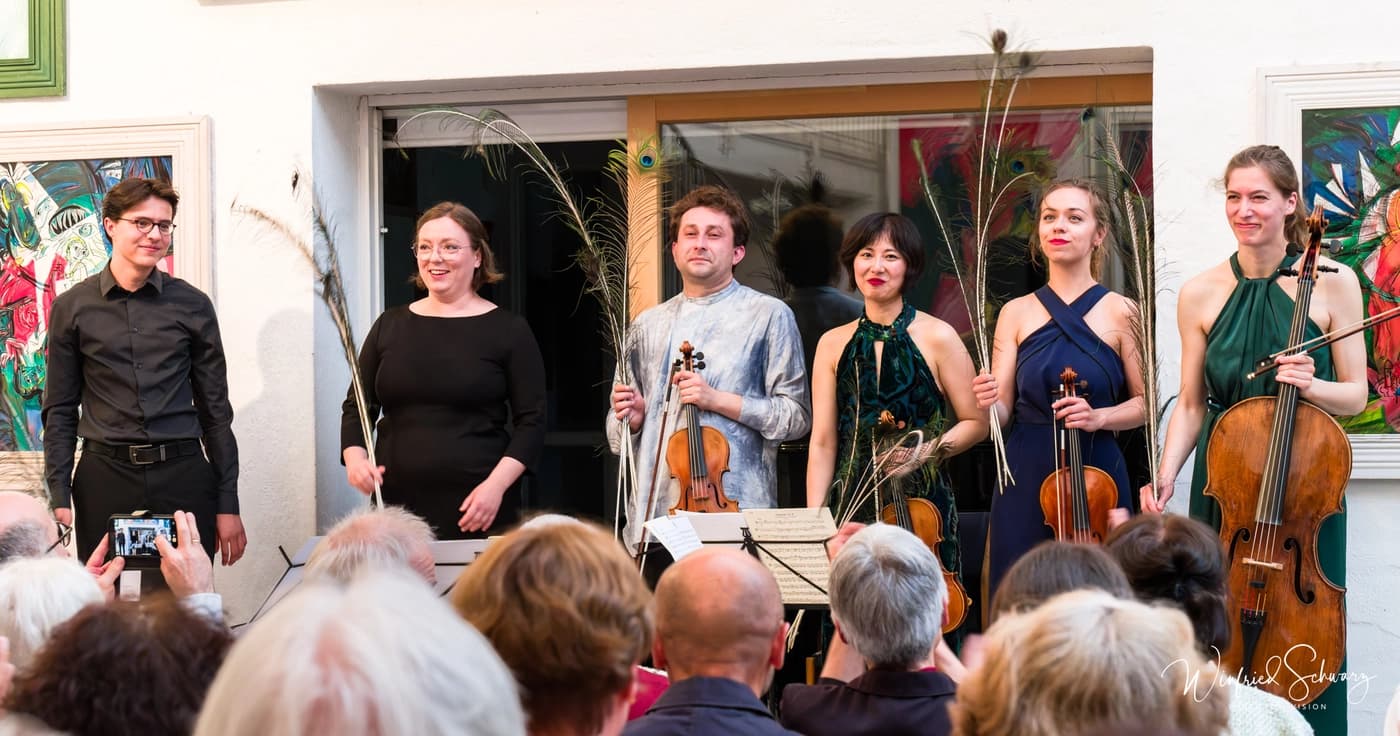
Kammenos also knew that the name of the pavane (according to Johann Gottfried Walther in 1732) comes from "pavo", the Spanish word for peacock. This drew an arc into the here and now, to the peacocks strutting about the Foundation grounds, which drew attention to themselves again and again with their calls – and even greeted some visitors with a magnificent fan of their tail feathers.
The germ cell, the text "Death and the Maiden", was written by Matthias Claudius in 1774. Two stanzas form a polarity between the frightened maiden ("Go, wild man of bones") and the almost loving death ("You shall sleep softly in my arms"). A polarity that Schubert gratefully took up in 1824. In the second, slow movement the consoling melody of the song written back in 1817 is varied. In the three other movements, above all in the closing Presto, Schubert lets the grimacing faces of death flash out. Fear of death and the struggle with it, illustrated in sound. Presumably the incurably ill Schubert was also working through his own shadows and abysses here. Life as the wandering of an unhoused, homeless man into death: this theme occupied him all his life and finally culminated in "Winter Journey".
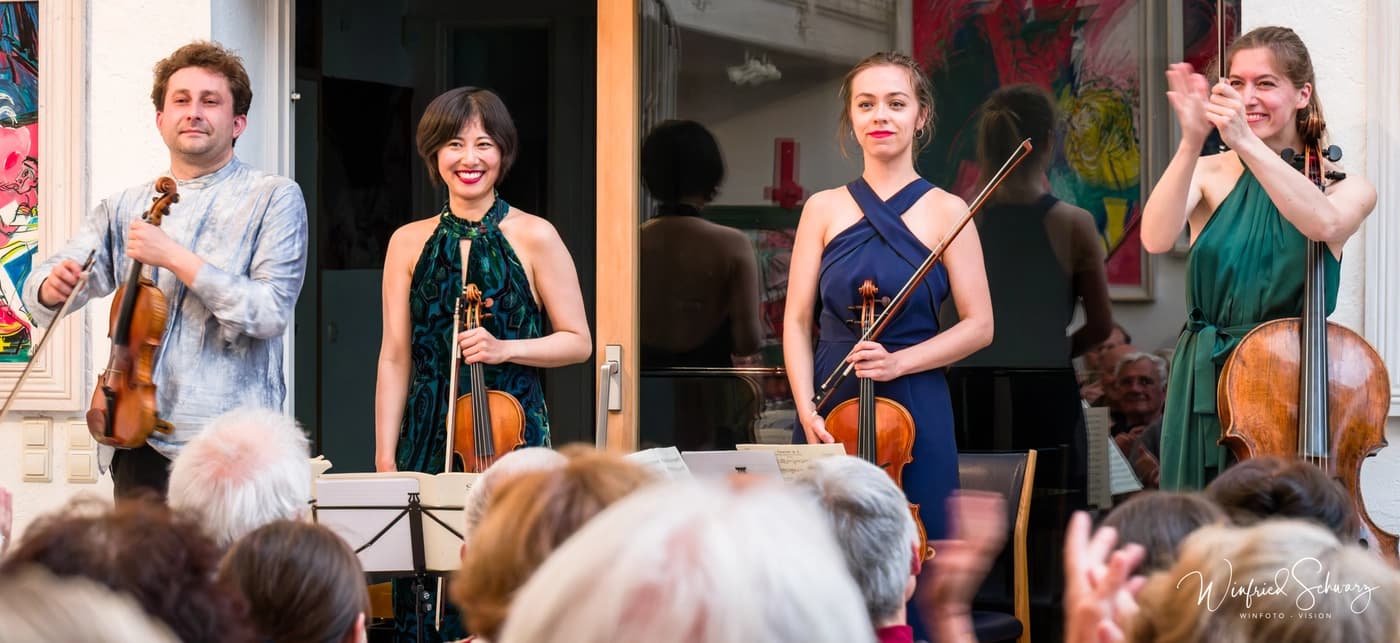
From the Frankfurt-based Malion Quartet one heard a masterly interpretation of this complex work. Alex Jussow (violin, already known at the Foundation as a soloist), Miki Nagahara (violin), Lilya Tyrnchsyhyn (viola) and Bettina Kessler (cello) swept the audience in the full house to storms of applause, which were rewarded with precious encores: two fugues by Johann Sebastian Bach from The Well-Tempered Clavier (Book II), arranged by Wolfgang Amadeus Mozart. After the drama and the contrast-rich tension of Schubert, the gate to eternity now opened. One heard a measured circling beyond time and space. These notes wanted to go nowhere, they had made it, resting wholly within themselves.
Markus Noichl Memminger Zeitung of 05.06.2025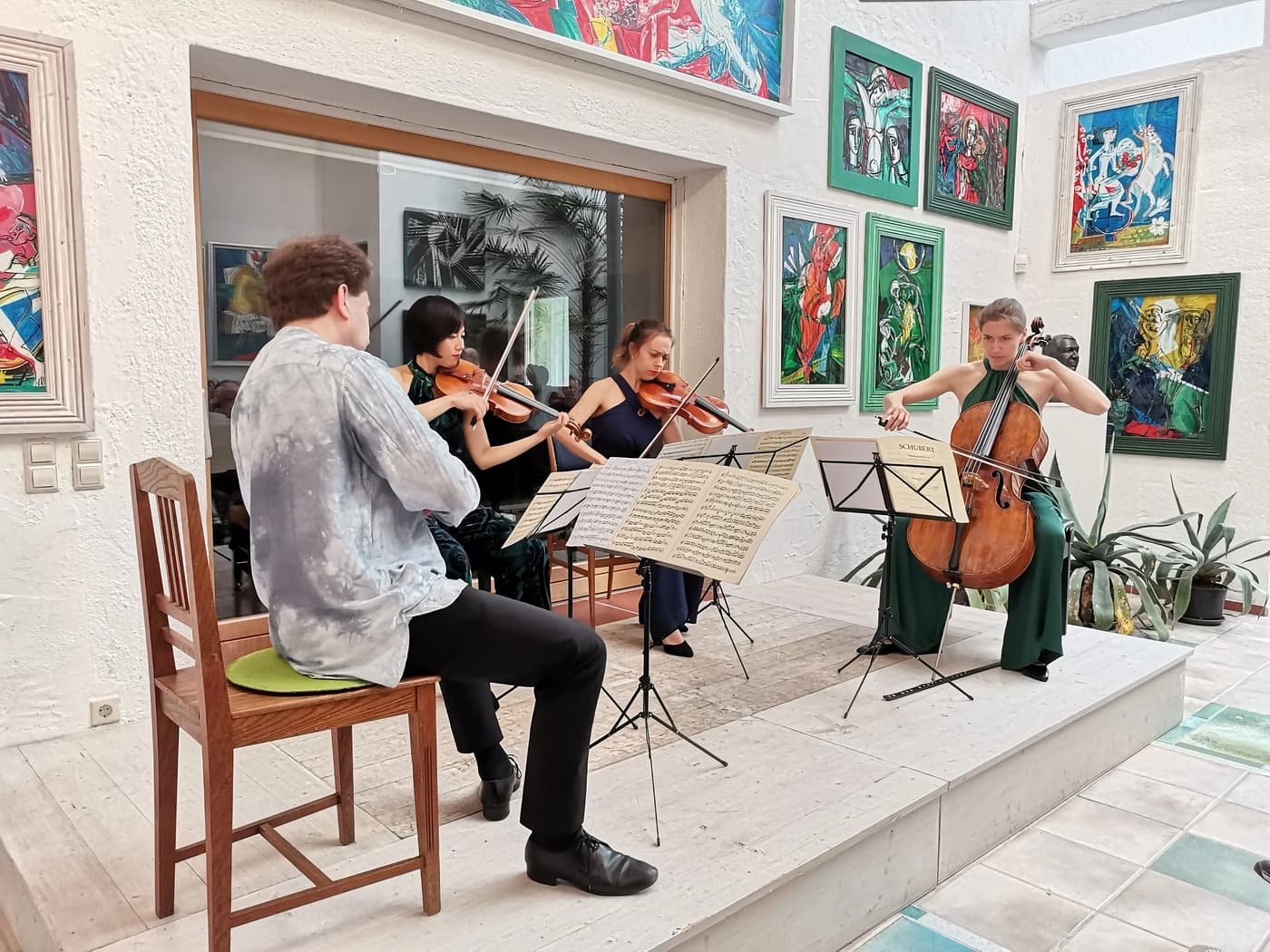
Photos of the event by Winfried Schwarz: